
B2B Website Redesign: Enterprise Lead Generation
Transform corporate B2B web pages into high-converting sales assets using automated AI layout tools and clean React code exports.
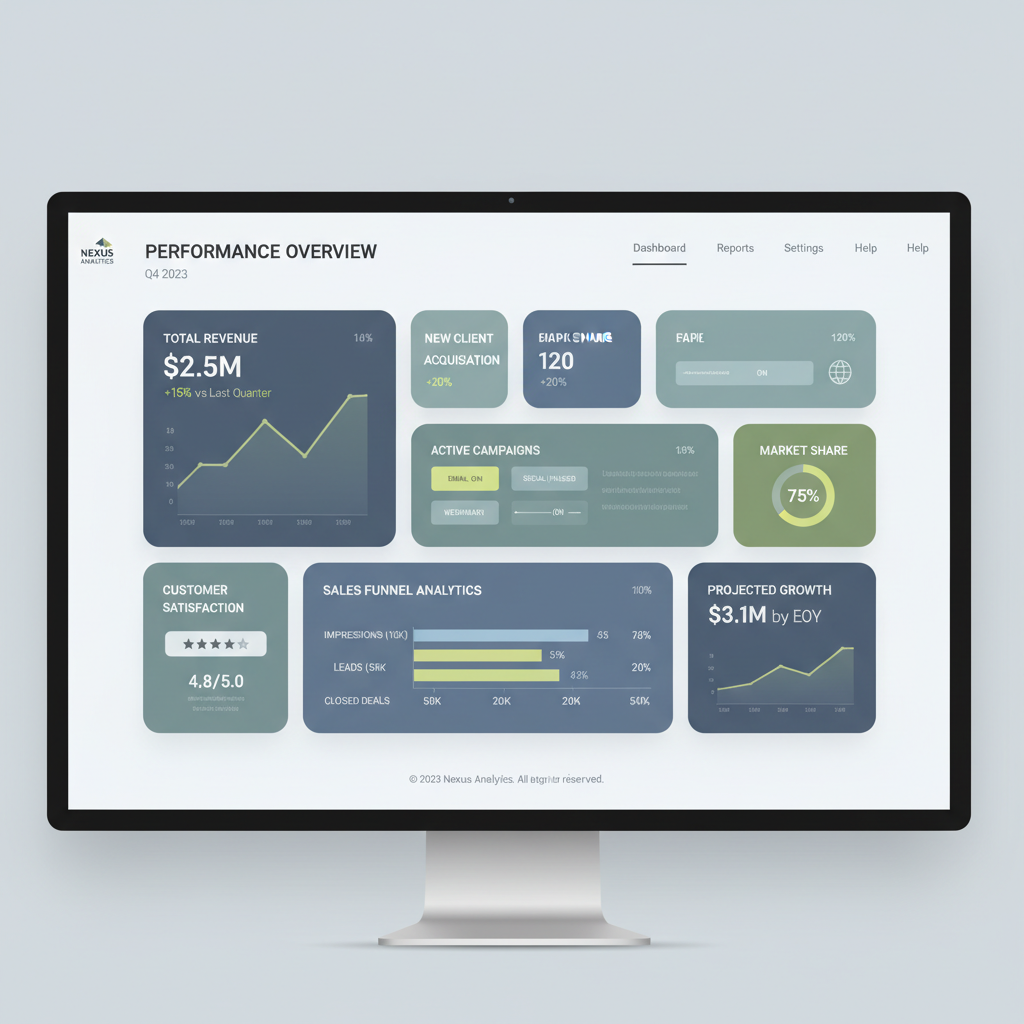
The Role of Modern Web Design in B2B Sales
In the B2B SaaS and professional services sectors, sales cycles involve multi-stakeholder evaluations. Corporate buyers, procurement teams, and C-level executives visit your website to assess technical capability, security compliance, and market credibility.
A dated 2010s website aesthetic with dense walls of text, non-responsive tables, and hidden contact forms signals technical debt and causes prospective enterprise clients to choose modern competitors.
Redesignr.ai enables B2B growth teams to ingest existing corporate URLs and generate modern visual layouts complete with clean React code in seconds.
4 Core Pillars of a High-Converting B2B Redesign
1. Enterprise Value Proposition & Hero Messaging
B2B buyers evaluate software and services based on immediate ROI and risk mitigation. Redesignr structures hero sections around clear B2B value propositions, primary demo booking CTAs, and enterprise trust badges.
2. Bento Grid Interactive Case Study Cards
Showcase customer success metrics, client logos, industry certifications, and video testimonials in scannable Bento Grid containers designed for executive decision-makers.
3. Frictionless Multi-Step Lead Capture Forms
Replace lengthy single-page contact forms with progressive multi-step lead capture widgets that increase demo request conversions without overwhelming prospects.
4. Clean Production Code Export & CMS Compatibility
Export 100% standalone React components or static HTML/CSS files that integrate easily into HubSpot, Next.js, or custom enterprise CMS stacks.
Enterprise Growth Impact
1. Increased Demo Request Conversions
By placing clear primary CTAs above the fold and highlighting client ROI metrics in scannable Bento cards, demo booking rates increase significantly.
2. Sub-1.5-Second Mobile Loading Performance
Export lightweight React code components that load rapidly on executive mobile devices, preventing bounce rates during sales calls.
B2B sites are judged by a buying committee over weeks, not by an individual in ten seconds, and almost every design decision that matters follows from that. Applying consumer web thinking to a B2B site produces something that looks current and fails at the job.
You are designing for a committee, not a visitor
A meaningful B2B purchase involves several people with different questions. The person who found you wants to know whether it solves their problem. Their manager wants to know the cost and the risk. Procurement wants terms. Security or IT wants compliance answers.
They visit at different times, often without talking to each other, and any one of them can stop the deal. A site optimised entirely for the first visitor sends the others away empty-handed.
This is why B2B sites need more depth than consumer sites, not less. The pages that look like clutter to a designer — the security page, the integrations list, the detailed comparison — are what the rest of the committee came for.
The pages that actually get read
In most B2B funnels a small set of pages does the work, and it is not the set that gets the design attention.
The homepage establishes category and credibility. The product or solution page answers whether it does the thing. And then the ones that decide it: pricing, integrations, security, and case studies from companies that look like the buyer.
Pricing deserves particular attention. Hiding it entirely behind "contact sales" is a defensible strategy for genuinely bespoke enterprise deals and an obstacle everywhere else — buyers building a shortlist will simply drop you rather than book a call to find out whether you are affordable.
Proof has to be specific to be worth anything
Generic trust signals do nothing in B2B. A row of logos with no context, a testimonial attributed to "J.S., CEO", a claim of "trusted by industry leaders" — buyers discount all of it because they know how easily it is produced.
What works is specific and checkable: a named company, a named person with a real title, a number they will stand behind, a case study describing an actual situation. One of those outperforms twenty logos.
If you cannot get permission to name customers, name the situation instead — the industry, the size, the problem, the outcome. Specificity is the property that matters; identity is one way to achieve it.
Forms are where B2B sites lose people
The longer the form, the fewer completions — this is not controversial. What is under-appreciated is that the fields you add are usually for internal routing rather than qualification.
Asking for company size, role, budget and timeline before someone has spoken to anyone is asking a stranger to qualify themselves for your convenience. Much of it can be enriched afterwards from an email domain.
The useful question is which fields would actually change your response. If the answer is none, ask for an email address and a message, and gather the rest in the conversation.
Redesign without disturbing the funnel
B2B sites usually sit inside marketing infrastructure — attribution, lead routing, nurture sequences, sales enablement — and a redesign can break all of it silently.
Before launch: inventory every tracking script, every form endpoint, every UTM-dependent landing page and every asset link used in outbound campaigns. Sales sequences frequently link to specific URLs, and those break without anyone noticing until a rep complains.
After launch, verify that form submissions arrive, route correctly and trigger what they should. Test the whole path, not just that the form says thank you.
- Tracking scripts — confirm they fire on every template, not just the homepage.
- Form endpoints — test end to end — submission, CRM record, routing, notification.
- Campaign URLs — outbound sequences and ads link to specific pages; redirect them.
- Gated assets — check that download links still resolve after the URL structure changes.
Measure it over a quarter, not a week
B2B sales cycles run for weeks or months, so the metrics that matter cannot respond quickly to a redesign. Judging one on the first fortnight's lead count is measuring noise.
Watch leading indicators in the short term — traffic to the pricing and case study pages, form starts versus completions, time on the solution pages — and hold the pipeline judgement until a full cycle has passed.
And instrument it beforehand. Deciding what you will measure after the redesign has launched means having no baseline to compare against, which is how these projects end up defended on opinion.
Design for a committee: keep the depth that procurement and security need, make proof specific and checkable, shorten the forms, and protect the tracking and campaign URLs at launch.
Frequently Asked Questions
How does an AI website redesign increase B2B lead generation?
AI B2B redesigns optimize visual hierarchy, clarify value propositions, highlight social proof trust seals, and simplify lead capture forms, resulting in higher demo booking conversion rates.
Can Redesignr.ai redesign complex enterprise SaaS websites?
Yes. Redesignr ingests existing B2B website URLs, parsing text content and feature hierarchy to compile modern responsive web pages in under 30 seconds.
Will an AI redesign affect our existing CRM integrations?
No. Redesignr handles the front-end visual layer and exports clean code, allowing your backend form Webhooks and CRM routing rules to remain completely intact.
Redesign Your B2B Website Today
Enter your B2B website URL into Redesignr.ai to generate a high-converting corporate layout in seconds.
Redesign B2B Site Now